




For years and years, spinal cord injuries have been considered largely irreversible, with damage leaving millions of people with limited options for recovery. For teenagers and young adults, spinal cord injuries caused by sports accidents, car crashes, or other traumatic events can dramatically change their lives and future plans. A recent discovery has left the healthcare world in shock. Tatiana Coelho de Sampaio developed the drug “polylaminin,” a groundbreaking discovery that regenerates spinal cord tissue. She created this polymerized form of the protein laminin after almost 30 years of research. Her work offers new hope that future patients, including young people facing life-altering injuries, may one day regain functions that were once thought to be permanently lost.
Let us slide into your dms 🥰
Get notified of top trending articles like this one every week! (we won't spam you)About Her
Tatiana Coelho is a biologist who holds a degree in Biological Sciences. She attended the Federal University of Rio de Janeiro and completed both her master’s and doctoral degrees.

For over three decades, she has dedicated her time to studying proteins in the nervous tissue, especially laminin.
Laminin: a natural protein involved in neural regeneration.
She is now thought to become a future candidate for the Nobel Prize in Physiology or Medicine.
Tatiana has already won the 2026 Woman Awards for her work on polylaminin.

Take the Quiz: Discover Your Ideal Stress-Relieving Hobby
Everyone deals with stress differently, and finding the right hobby can help you relax and unwind. Take this quiz to find out which stress-relievin...
The Discovery
After years of research on the protein laminin, Tatiana and her team found that it could be induced to self-assemble into a polymerized form with properties very different from ordinary laminin.
To find this out, researchers exposed laminin to acidic conditions, observing that instead of remaining as individual molecules, it assembled into larger polymeric structures. After this, they then investigated whether this new structure had different biological effects on neurons.
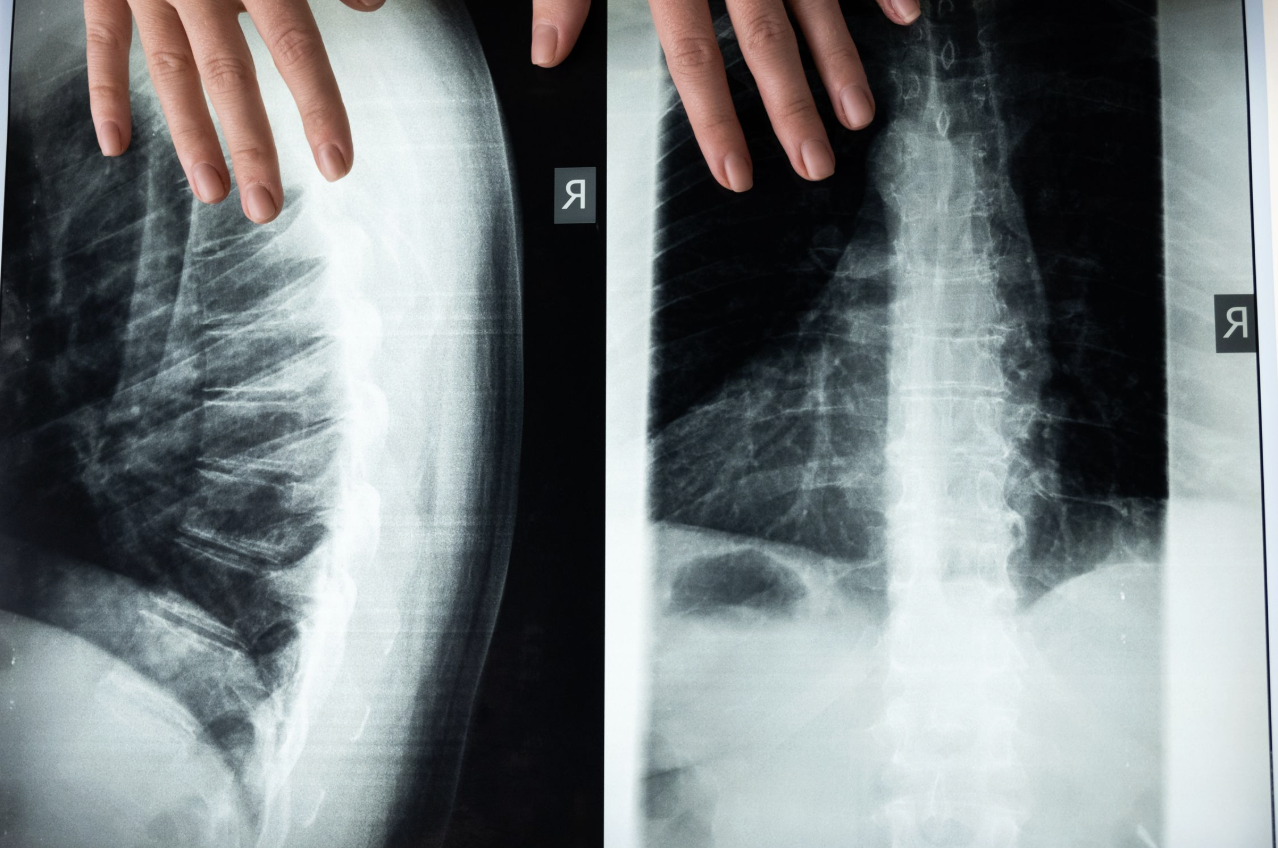
Their experiments showed that not only did the polymerized material promote neurite outgrowth better than ordinary laminin, but it also formed complex nano- and micro-scale structures and supported axonal regeneration in animal models of spinal cord injury.
Neurite outgrowth: growth of neuronal projections.
Nanostructures: materials or engineered structures with at least one dimension sized between 1 and 100 nanometers.
Microstructures: the very small-scale structure of a material—such as metals, ceramics, or polymers—typically visible only through a microscope at magnifications greater than (25\times). Usually in the range of 1–100 (\mu )m.
Axonal regeneration: the biological process by which severed or damaged nerve fibers (axons) regrow to reestablish connections with muscles, organs, or other neurons.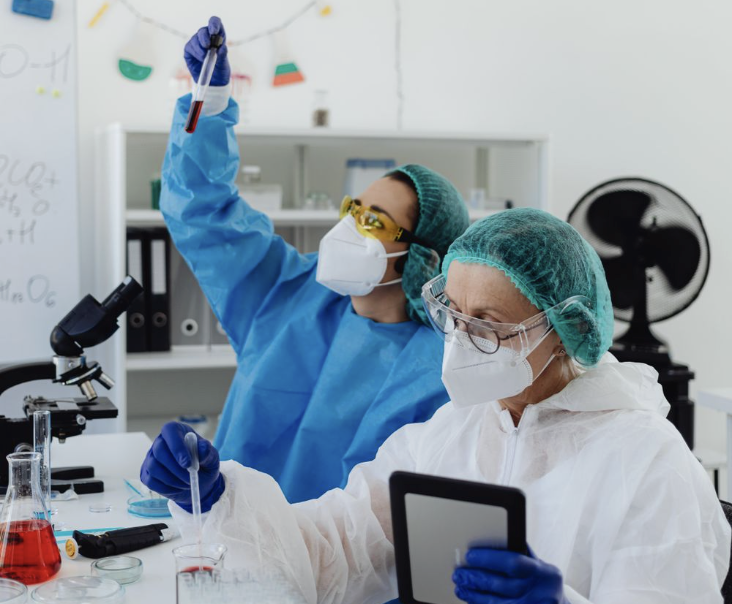
Over time, the team mastered the formation of polylaminin and searched to see how it interacts with other extracellular matrix components such as "Type IV Collagen".
Extracellular matrix components: a non-cellular, 3D network of macromolecules—mainly collagen, glycoproteins, and proteoglycans—that surrounds, supports, and regulates cells within tissues.
When the Polylaminin is connected to the Type IV collagen, it forms a strong network or structural backbone in the basement membrane.
Step By Step
- Polylaminin forms a network
- Multiple laminin molecules join together into a polymerized structure.
- This creates a scaffold that resembles the natural extracellular matrix.
- Type IV collagen binds to the laminin network
- Specialized regions on laminin molecules interact with Type IV collagen.
- These connections stabilize the extracellular matrix and make it mechanically stronger.
- The combined network sends signals to cells
- Cells attach to laminin through receptors called integrins.
- The interaction between polylaminin and Type IV collagen helps organize these signaling pathways.
- These signals promote cell survival, migration, differentiation, and tissue repair.
- In spinal cord regeneration
- After injury, scar tissue often blocks nerve growth.
- Polylaminin provides a growth-friendly surface that guides neurons.
- The association with Type IV collagen helps recreate a basement membrane-like environment, allowing nerve fibers to extend more effectively through damaged tissue.