



The quotation marks should tell you which "Wuthering Heights" I’m talking about.
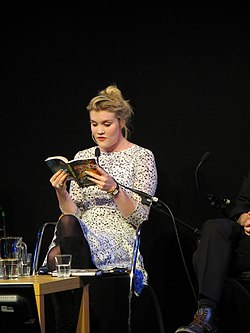 Credit: Wikipedia Commons
Let me preface this by saying that although I am a classics expert and a fan of classic literature, I am not emotionally attached to this book. I appreciate it for what it is. I think it’s a masterpiece in its own right. I’m just not the target audience for it.
Therefore if you are in the “i liked the movie, i don’t know why i’m not allowed to like it crowd” or if you’re in the “i hated the movie i just can’t express why i hated it” crowd, or if you’re in the “i hated the movie and i can express exactly why” crowd, you are in the right place here. Make yourself at home, the trash is over there where the rest of us live.
Let us slide into your dms 🥰
Get notified of top trending articles like this one every week! (we won't spam you)What is Wuthering Heights and Why Does Everybody Feel So Strongly About It?

Credit: Wikipedia Commons
Wuthering Heights is a very old book, the only book that Emily Brontë ever wrote. It’s her magnum opus, her life’s work, her expression of what she thinks of this world. If you read the book, you know that her opinion on the human condition is not exactly high.
According to Emily, people are vile. Classism, racism, domestic violence and emotional abuse will forever change the course of your life and you will not have any say in how it happens or why it happens. That is the message. And it’s a pretty timeless one.
Understandably, when those messages get altered and turned into an exploration of kink, [censored], all accompanied by wild costumes that break your suspension of disbelief, some folks are bound to get angry.
The director, Emerald Fennell, has found her ‘brand’ in fetishizing sexual violence, and in some of her work, the art sometimes sends the right message. For example, her movie Promising Young Woman is generally acclaimed and well-liked by audiences for its exploration of sexual violence.
Since we are talking about sending a message through art, this is why “Wuthering Heights” dropped the ball:
Brontë’s 1847 novel is not a bodice‑ripping romance; it is a gothic meditation on generational trauma, domestic abuse, racism and class prejudice. Tamara Segal, writing in The Daily Campus, reminds readers that Catherine and Heathcliff’s relationship is “so tumultuous that it literally kills Catherine”.
Their famous declarations of eternal love—“I am Heathcliff” and Heathcliff’s anguished cry, “I cannot live without my life! I cannot live without my soul!”—are not the utterances of well‑adjusted lovers but of two individuals locked in a cycle of obsession and abuse. Segal notes that the novel’s gothic setting, haunted by ghosts and stormy moors, underscores the dysfunction of their bond. In other words, Wuthering Heights is a ghost story first and literary fiction second.

Take the Quiz: Which Studio Ghibli Character Are You?
Are you a brave warrior, a free-spirited dreamer, or a gentle guardian?
Fidelity to the Source Material Is Irrelevant When Adapting For the Screen
Have you seen Clueless? Maybe you didn’t know that the movie is actually an adaptation of Jane Austen’s Emma. Yeah, bet I just blew your mind with that one.
When adapting for a screen, there are three crucial things to keep in mind: Pacing, Dialogue, and Theme. Fidelity to the source material ranks fourth at best.
As long as you understand what the source material is trying to say to the world, as long as you keep in mind what the intended message to the consumers is, you will produce an adaptation that people will like.
Cathy’s and Heathcliff’s relationship is a tragic dumpster fire. Have you ever come across a romantic dumpster in the wilderness? Dumpster fires are ugly, filthy, and it’s best to avoid them unless you’re a firefighter trying to put them out.
If you hate this movie and you just can’t quite put your finger on why–this is a major reason. You probably read the book and think that the movie is not faithful to the book at all, therefore that’s the reason you hate it. It’s not, or at least, not as much as you think.
The reason is that the spirit of the book has been bastardized and erased in this adaptation, and that just doesn’t sit right with you (or me).
Fennell has been candid that her film is a version of Brontë’s novel rather than a faithful translation. In an interview with Fandango, she explained that you cannot adapt such a dense, complicated book word‑for‑word: “I can’t say I’m making Wuthering Heights. It’s not possible.
What I can say is I’m making a version of it. There’s a version that I remembered reading that isn’t quite real… there’s a version where I wanted stuff to happen that never happened”. She even placed quotation marks around the title to underscore this self‑conscious distance. Critics in Script Magazine draw a broader lesson from her approach: the most faithful adaptations are often the most banal, whereas the best adaptations “have nothing to do with fidelity to the source material and everything to do with the vision of the writer and filmmaker”.
Veteran screenwriter Alan Rudolph recalls advice he received from novelist Kurt Vonnegut and director Robert Altman: when adapting a novel, “forget the book and write a screenplay based on what made a movie work”.
Scholars of adaptation agree. Linda Hutcheon argues that adaptation is “an extensive transposition” that involves “(re‑)interpretation and then (re‑)creation,” and that proximity or fidelity to the original text should not be the criterion of judgement. In other words, an adaptation must stand as its own work of art. The challenge is to translate the spirit of the source material into a different medium without reducing its complexity.
Fennell’s previous work, Promising Young Woman, shows she is capable of confronting dark subject matter with style. Critics from The Film Magazine note that the film “slowly dismantles the layers of shame‑culture and victim‑blaming that normalise sexual violence” and weaponises feminine aesthetics—bubble‑gum pinks and florals—to expose rape culture.
Yet the success of that film does not automatically guarantee that the same sensibilities will suit Wuthering Heights, a book deeply rooted in historical realism and gothic atmosphere.
 Credit: Wikipedia Commons
Suspension of Disbelief
Ma’am, why are you barking on the floor like a dog? Why are people wearing latex in the North of England in the 19th century?
Well, be prepared to die with those questions in mind because this movie is not interested in linking any of these random visuals to the plot or the theme.
The aesthetics the director is so fond of do not gel well with the location and the time period it is set in. All of that breaks the audience’s immersion. In other words, the world-building of this movie is non-existent.
This brings us to the core of my complaint: Fennell’s adaptation may be bold, but it systematically erases the spirit of Brontë’s novel. The film substitutes fetishised sexual violence and [censored] imagery for the novel’s brooding exploration of trauma. Anachronistic latex costumes and choreographed kink sequences might be visually arresting, but they break the audience’s suspension of disbelief.
The problem is not that Fennell has made changes; adaptation demands change. The problem is that she has replaced Brontë’s themes of generational violence, classism and racism with a glossy tableau of [censored] spectacle.
In the words of Daily Campus columnist Segal, the novel’s warning about toxic love is being overwritten, and “the violence within either discarded or romanticised”. When the marketing campaign proclaims that the film is “inspired by the greatest love story of all time”, it misleads audiences and understandably angers those who understand the intent of Brontë’s novel.
Fennell did not do enough world-building to make us believe in her version of Wuthering Heights. Take Bridgerton, for example.
Netflix’s Bridgerton embraces anachronism openly, reimagining Regency England as a racially diverse, candy‑coloured fantasy. Because it foregrounds its alternative reality, viewers can accept modern music and inclusive casting as part of the show’s rules. Fennell, by contrast, retains the moors, the period setting and the names of Brontë’s characters but introduces modern fabrics and behaviour without establishing a coherent alternate world.
The result feels like Jumanji characters crashing into the Yorkshire moors: one half of the audience is ready for ostriches in latex skirts; the other half is still waiting for the original story to begin.
Why You Like the Movie
If you delighted in Promising Young Woman or are drawn to Fennell’s visual style, you may find pleasures in this adaptation. The cinematography evokes the technicolour dreams of Powell & Pressburger, and Margot Robbie and Jacob Elordi deliver committed performances that make their sadomasochistic courtship strangely compelling.
The screenplay streamlines Brontë’s labyrinthine narrative—cutting the second generation entirely—to focus on the fraught bond between Catherine and Heathcliff. For viewers who prioritise mood over deep thought, and who possess an Olympic‑level suspension of disbelief, this film may function as a dark fairytale.
Nevertheless, for those who revere Brontë’s novel or who simply expect an adaptation to engage with its core themes, this film will feel less like Wuthering Heights than like Wuthering Heights in scare quotes. Adaptation, as Hutcheon reminds us, is “repetition without replication”; Fennell’s film, however, repeats little and replicates even less. It is a provocative experiment that may succeed on its own terms but fails to grapple with the novel’s moral and social weight.
I don’t begrudge anyone their enjoyment of Fennell’s creation. Cinema thrives on reinvention, and there is room for multiple Wuthering Heights to exist laterally rather than hierarchically. But honesty is crucial. If you market your film as Brontë’s Wuthering Heights, you inherit not just the title but the ghosts that haunt the moors.
The greatest disservice an adaptation can do is to strip a classic of its soul; the tragedy of Fennell’s film is that, in its quest for shock and sensuality, it loses sight of the raw, bleak heart that made Brontë’s work endure.

Credit: Wikipedia Commons


.jpg)

