





If you have ever come across the political side of social media, you may have seen comments that look similar to these: "That's communist", "Sounds like socialism to me", "They must be a Marxist". These words get thrown around far too often and get confused with one another, whether it's in a serious debate or just trying to prove a point online. But how many people actually know what these words mean? And more importantly, how are these words relevant in today's society?
As teens enter into the world, it is crucial that we understand terms and ideas that are significant in today's political system. These words shape how we see fairness, freedom, and each other. Today we will break down what each term really means, why people mix them up, and why understanding them matters.
Let us slide into your dms 🥰
Get notified of top trending articles like this one every week! (we won't spam you)
Photo by Jonathan Simcoe on Unsplash
Take the Quiz: What Kind of Political Personality Are You?
Ever wondered what role you’d play in the political world? Take this fun quiz to find out!
What is Communism?
In simple words, communism is a system where everything is owned by the community, and everyone gets according to their needs. It aims to abolish social classes (like upper-class, middle-class, and lower-class). In the long term, communism envisions a society where there is no need for government and the people would cooperate and manage their affairs on their own. Historically, this idea has been implemented by the Soviet Union, China, etc, however no known country has reached the stage where government is no longer needed.
While the idea sounds reasonable in theory, there are many reasons why it simply doesn't work. For example, in communism, private property is abolished and the state controls the means of production. This often leads to a lack of motivation and innovation because individuals are not rewarded for their hard work.
If you cannot accumulate any wealth and necessities are given to you anyway, why work? This creates a stagnant society where there is no need for any new ideas.
While equality is good in principle, the communist implementation of it can lead to the loss of personal freedom. Because the government controls almost everything, like jobs, property, and the distribution of resources, they can also control what people can say or do. Since everyone is supposed to be "equal", people are not allowed to make their own choices about money, work, or even beliefs. Disagreement can lead to punishment, ultimately taking away personal rights.
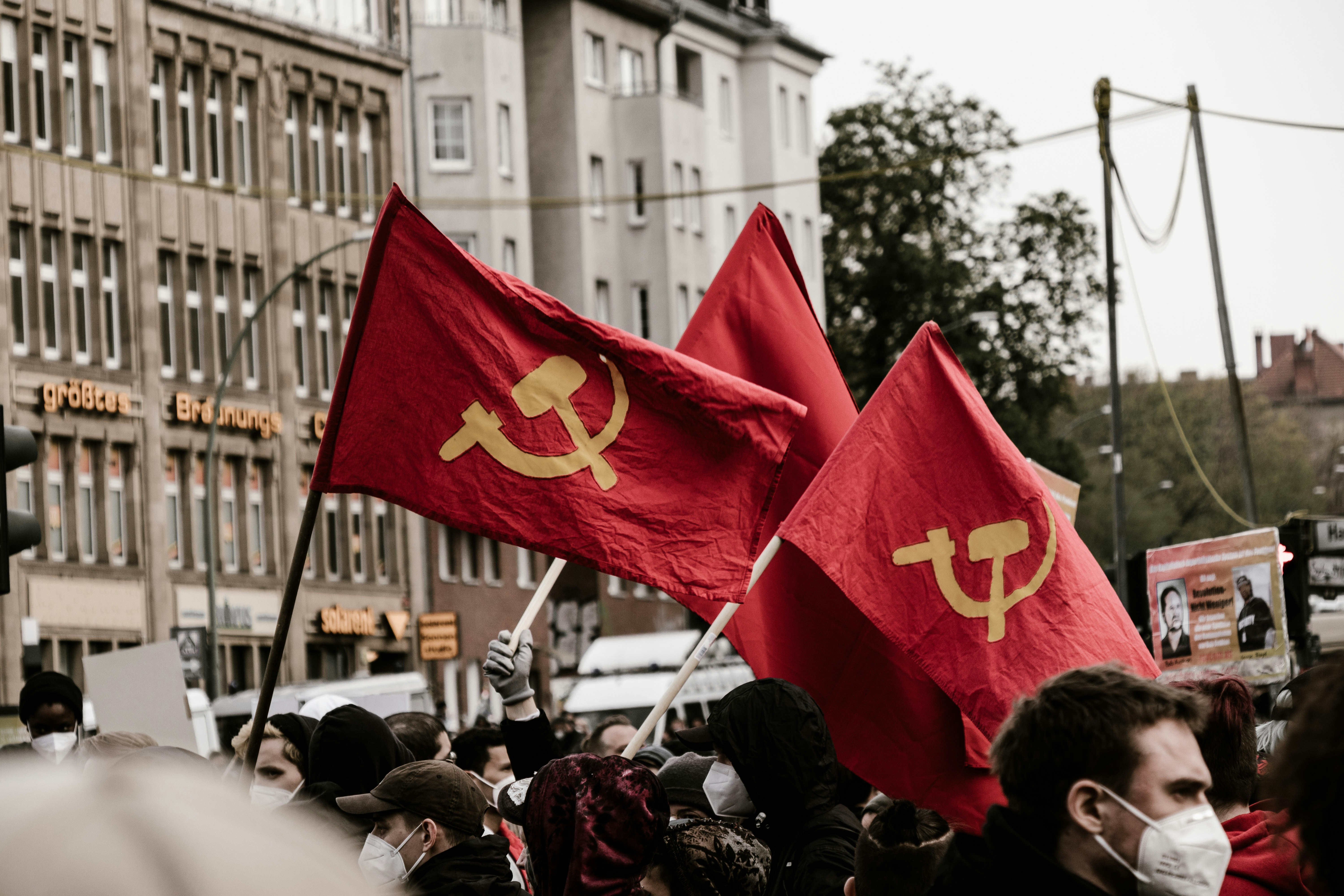
Photo by Moises Gonzalez on Unsplash
What is Socialism?
Similar to communism, socialism is where the government or people own major industries to ensure fairness, but private property and markets can still exist. It aims for a more equal distribution of wealth and resources. While communism is where resources are owned communally and distributed based on need, socialism involves social ownership and control of the means of production.
While no country is purely socialist in the strictest sense, some have socialist elements, such as nationalized industries or extensive social welfare programs. There are various social democracies like Sweden or Canada that use socialist policies.
Although socialism aims for an equal world, it has far too many criticisms. Since the government has more control over money and services, it can lead to the misuse of power or corruption. Additionally, to pay for free healthcare, college, and other services, the government usually has to charge people more money in taxes.
Many critics argue that socialism can stifle innovation and economic growth due to a lack of competition and profit motive. Some critics even point to historical examples where socialist states have failed to achieve their goals and have resulted in authoritarianism and economic hardship.
"The problem with socialism is that you eventually run out of other people's money." - Margaret Thatcher
What is Marxism?
Marxism is more an idea than a system. It is a theory by Karl Marx that inspired socialism and communism. Marxism proposes that capitalism creates inequality and exploitation.
It refutes the idea that society should be split up into classes, primarily between those who own the means of production and those who work for them. It also argues that capitalism has internal contradictions that will ultimately lead to its downfall.
The ultimate goal of Marxism is communism, a classless, stateless society where production is owned communally and resources are distributed. However, it is important to note that Marxism is only a theory and acts more as a framework.
The problem with this theory is that when implemented, it has consistently resulted in economic and societal failures. Historically, Marxist-influenced regimes like the Soviet Union and China faced severe economic problems including poverty, scarcity, and a huge lack of innovation.
The state control seen in countries like East Germany (with the Stasi surveillance apparatus) instilled fear and mistrust among the people, hindering free expression and individual development. Ultimately, many can describe Marxism as too deterministic, as it overlooks the role of individual agency and the unpredictable nature of a society's development.
Although it has its faults, Marxism provides a sort of framework to understand the faults of capitalism and its global impact. And although the theory may be unreliable, it continues to influence academic fields and social movements around the world.
Why Do They Get Mixed Up?
These terms are just similar enough that many people cannot tell the difference at all. Think of it like a neighborhood dinner party. Socialism is where everyone brings food to share, and the hosts of the party help organize who brings what, so no one goes hungry. You still own your own house and make your own meals most days, but for big things like schools, hospitals and roads, everybody chips in.
On the other hand, communism would be where no one owns their house or kitchen, and everything is shared. The neighborhood decides what everyone eats, when they eat, and how much. No private ownership at all. And Marxism is ultimately the idea that started it all.
Unfortunately, these terms are often blurred or used together in media in order to cause confusion. For example, using terms like "communists" or "Marxist ideas" to describe anything that challenges the status quo can create a sense of fear and resistance to change, even when the changes proposed are far from what these terms mean.

Photo by 愚木混株 Yumu on Unsplash
Why is This Important?
Understanding the difference between Communism, Socialism, and Marxism is crucial for informed civic involvement. While often used together, they represent different concepts entirely. Knowing the difference can help you understand current events and political movements. A rise in youth activism today requires political literacy, and knowing these three terms is a good way to start.
"A well informed citizenry is the best defense against tyranny" - Thomas Jefferson