








I went to Manchester Comic Con for the usual reasons: a celebrity Q&A, and the faint, irrational hope that maybe — just maybe — someone would recognize me as a Serious Writer and not just a girl in a leopard print dress asking complicated questions about fascism in the middle of a fan panel.
You know, the usual fan stuff.
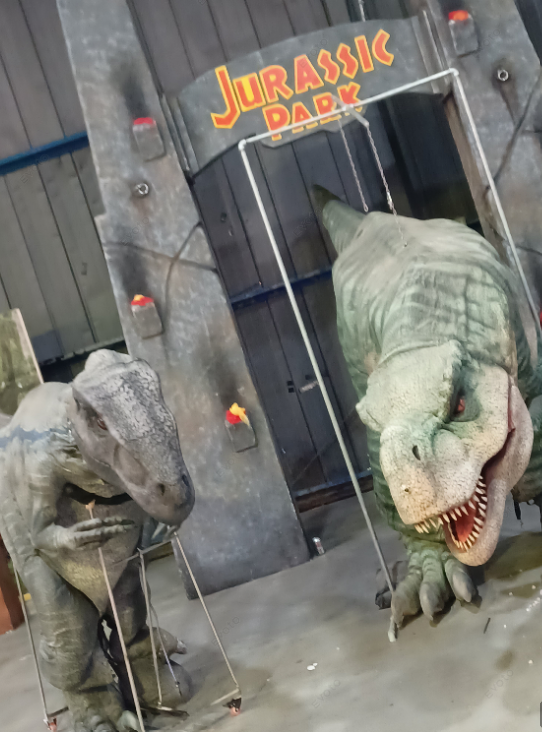
Photo Credit: Zara Miller
(Spoiler: I got both a quote and a compliment. I consider that a win in a town where the wind is so strong, everybody’s cosplay wigs kept flying off to Liverpool.)
Somewhere between a suspiciously cheerful admissions gal and a literal animatronic velociraptor entering a side door and interrupting the Andor panel, I met Abby and Luke, two cosplayers with all the gentle enthusiasm of people who still believe in magic.
Abby looked like a forest warrior princess who had wandered into a Renaissance fair, while Luke looked every inch her monk escort. I asked them why they dress up.
“Because our friends do,” they said, as if I’d asked why they breathe. “It would be strange not to dress up when they all do,” Abby affirmed.
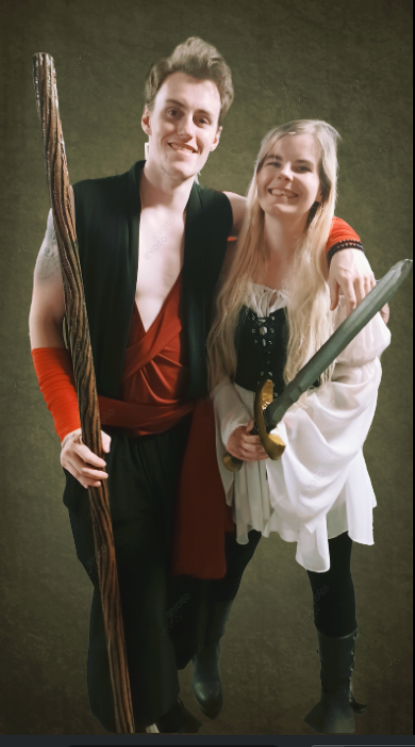
Photo Credit: Zara Miller
It wasn’t about spectacle or politics or canon accuracy. It was about participation. Ritual. Showing up in character because you want to belong, not to be seen.
I thought to myself, ‘Is this a sheep mentality? Is this a bizarre live-action, irony-filled example of how authoritarian regimes are created? Going with the flow?’
Or is this entirely innocent?
It got me thinking about villains. How they exploit this kind of thinking. How they create this kind of thinking and distribute it worldwide.
And that — oddly, wonderfully — brought me to the question I asked two Andor actors on the main stage: Denise Gough, who plays Dedra Meero, and Kyle Soller, who plays Syril Karn, the poster child for all of us who went to hide in our bedrooms during unpleasant house calls.
“Your characters both serve a fascist regime, a variation of which has existed in our real world. How do you make sure your characters don’t become caricature versions of someone we might recognize from history?”
Denise immediately said: “The writing. There’s a book about fascism that talks about how easy it used to be to spot the signs — now someone just puts on a lipstick.”
Kyle added: “Tony Gilroy is a student of history.”
And just like that, the panel gave me something more profound than I’d expected: a reminder that artists have a responsibility to portray evil accurately in all its shapes and forms.
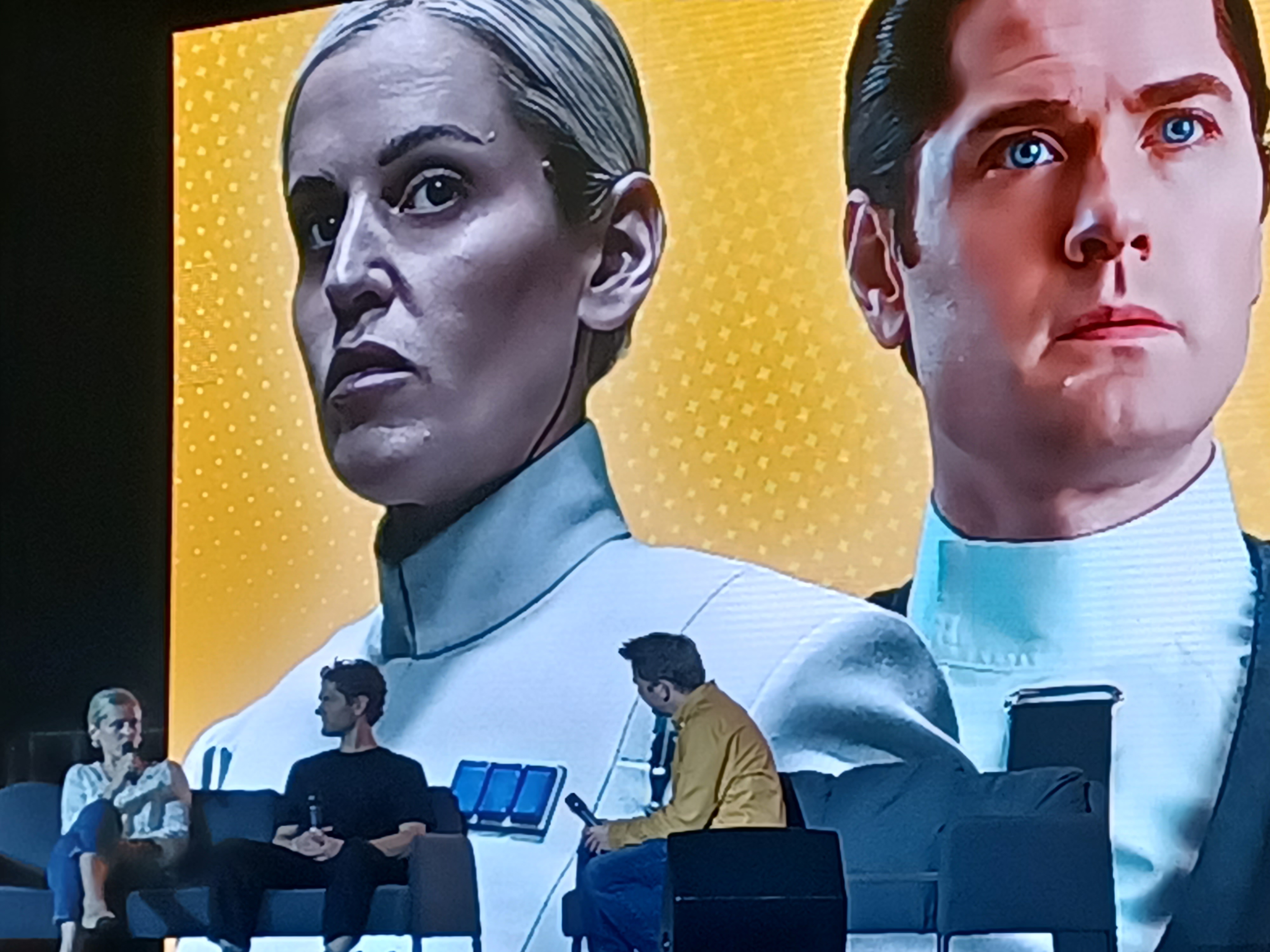
Photo Credit: Zara Miller
The Comfort of Caricature
It’s tempting to write villains as archetypes. Easier, even. You take an ideology, give it a face, and shove it on the page. Instantly boo-able.
The trouble with caricature is that it lets the reader off the hook.
It flattens tension into pantomime. The tyrant becomes a cartoon, the system a backdrop, and the audience gets to feel superior without ever feeling implicated.
This is the trap Andor refuses to fall into.
Dedra Meero believes in discipline, in hierarchy, in the necessity of suffering for the sake of order. She’s meticulous. She’s dismissed, underestimated, and overlooked.
You don’t exactly root for her. But you do recognize her. You may even have worked for her. You may even be her.
Syril Karn is worse. He falls in love with authority because it gives him a shape, purpose, and belonging.
He’s doing Empire stuff because everyone is doing Empire stuff. Lots of Empire stuff. He’s so busy with all this Empire stuff.
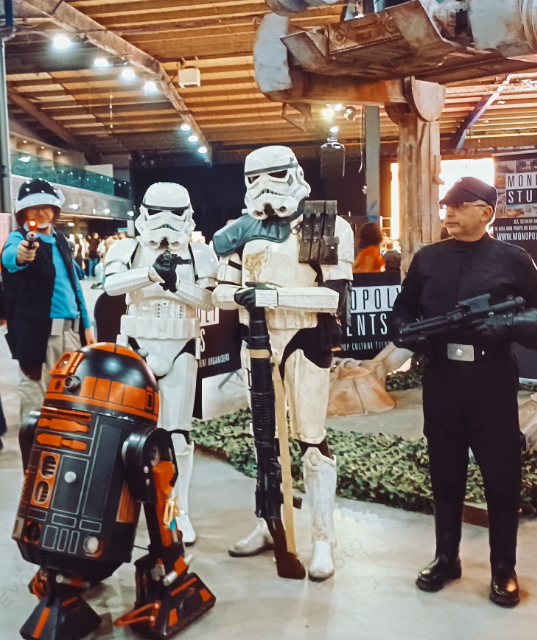
Photo Credit: Zara Miller
The Power of Precision
One of the most chilling scenes in Andor is a boardroom meeting. Mid-level officers discuss how to fracture a nation using kalkite. It reminds me of the real-life Wannsee Conference, where Nazis orchestrated [censored] over coffee.
Kyle was right — Tony Gilroy is a student of history. He absorbs it. Then he retools it into character.
As Denise said, fascism doesn’t look the way it used to. It dresses differently, their cars are much uglier these days (and way less durable). It doesn’t shout.
It smiles. It adjusts its lipstick. It says it’s doing this for your good.
Gilroy doesn’t aestheticize evil. And it reminded me that evil doesn’t need horns. Just a system. And a lot of people willing to believe in it.
Let us slide into your dms 🥰
Get notified of top trending articles like this one every week! (we won't spam you)So How Do You Write a Villain Without Losing the Plot?
If you want to write an antagonist who feels human and horrifying, not just theatrical, here’s what Andor teaches us:
- Don’t write an argument. Write a wound in a person, a system, a government. Ideologies are symptoms. The real story is emotional. What’s broken in them that makes control feel like salvation?
- Give them one thing they’re right about. Even monsters think they’re logical. Let them say something that makes your reader pause — and wince, saying, “Well, shoot. This Thanos guy might have a point.”
- Replace exposition with behavior. Don’t tell me they’re loyal. Show me the way they fold their clothes. Or rehearse answers to imaginary questions. Lots of villains are obsessed with order, but the best way to show it while humanizing them is to give them an obsessive, mundane routine that anyone can relate to.
- Let the cracks show. Even the cruel have mothers. Let your villain doubt themselves. Just once. Then push forward anyway.
- Cut the manifesto. Add a ritual. A dictator flossing is more unsettling than a ten-minute rant. Horror lives in normalcy.
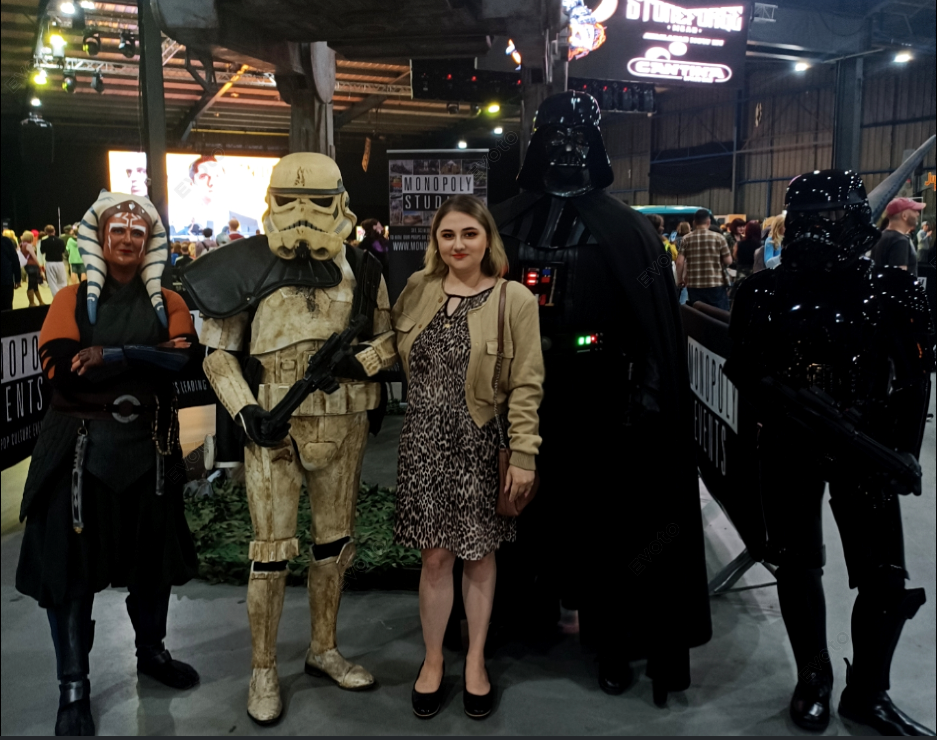
Photo Credit: Zara Miller
Final Thoughts from a Girl in a Leopard Dress at a Comic Con
I came to Comic Con for the fandom. I left thinking about lipstick and empire.
That’s what great writing does: it sneaks into the cracks of your brain and stays there. Dedra and Syril, aka Bonnie and Clyde from [censored], are just regular people who want to be a part of something that recognizes them, rewards them.
They are sheep who want to be leaders.
So write that.
Write the zealot in the cubicle. The woman with a spreadsheet and a moral equation. The man who calls surveillance religion.
Don’t write the monster. Write the person who thinks they’re the hero.
That’s the one who haunts us.