



Without feminism, where would we be today? Definitely not in university, voting, running for political offices, or even owning our own money. Feminist movements have existed for more than 200 years and yet we're still nowhere near equality.
One of the most influencial and well known periods for feminism was the so called second wave from 1960-1980. But how has feminism changed since then? And did we progress to be more effective or has the movement rather become divided?
Let us slide into your dms 🥰
Get notified of top trending articles like this one every week! (we won't spam you)What is Feminism?
The dictionary defines feminism as follows: “the belief that women should be allowed the same rights, power, and opportunities as men and be treated in the same way, or the set of activities intended to achieve this state”. Or as a shorter version: “an organized effort to give women the same economic, social, and political rights as men”.
Subgroups
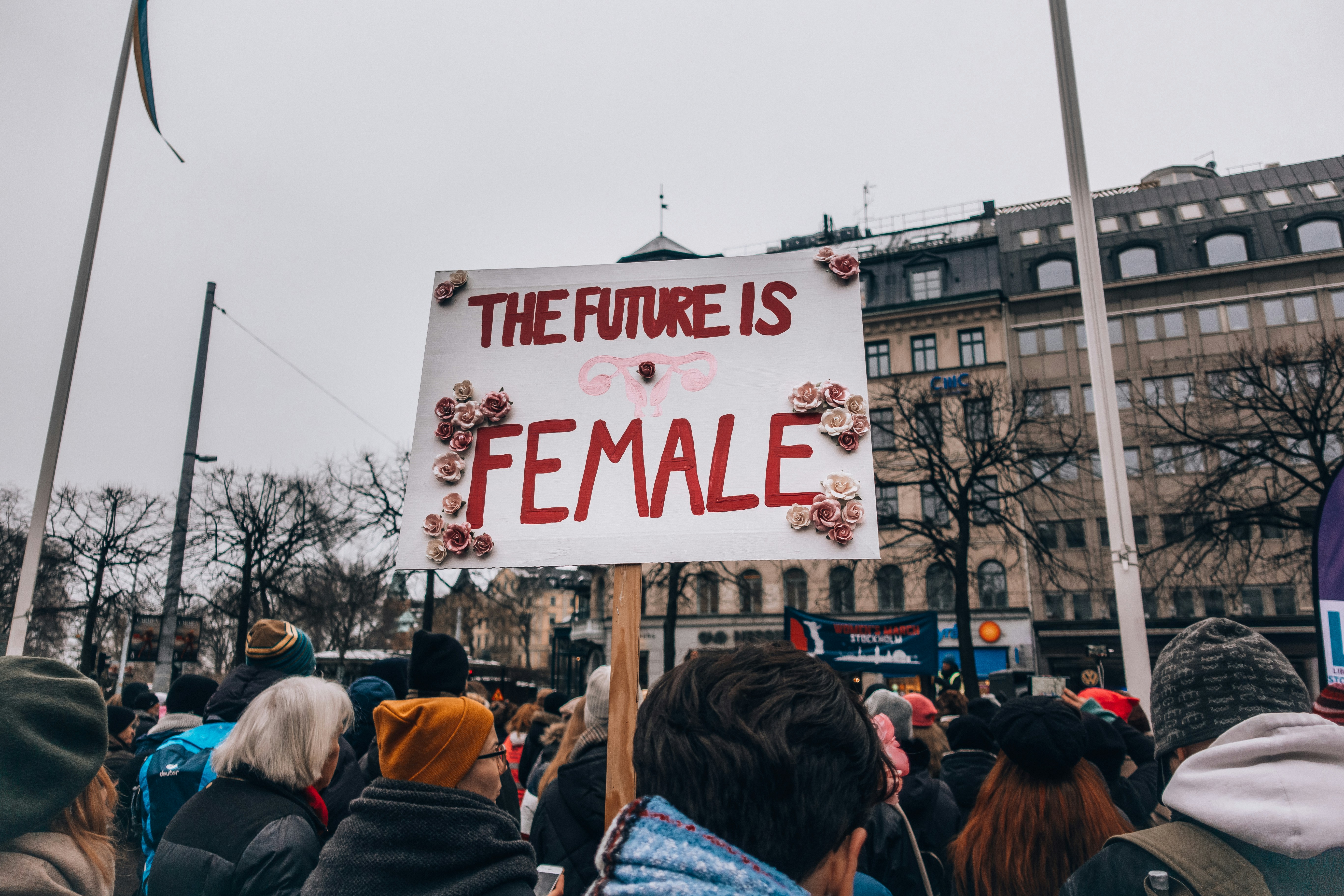
There are many different subgroups of feminism. All of them define it to fit their own focus. The three main feminist approaches are Liberal feminism, Marxist/Socialist feminism and Radical feminism.
Liberal feminists focus on political reforms inside the already existing structures. They fight for abortion rights, sexual harassment and affordable childcare. Critiques of liberal feminism claim that it’s based on individual success within the patriarchy, which leads to more exploitation of marginalised women.
Marxist or Socialist feminists think it’s necessary to end capitalism in order to end the oppression of women.
Radical feminists take it even further and claim equality can only be reached if the current society is changed completely.
Especially in the past Black and Lesbian feminism were pretty important subgroups as well, since they were often forgotten by white feminists.
Nowadays intersectional feminism is considered to be the most influential and common feminist theory. UN Women explains: “in today’s intersectional feminism, we mean equality for everyone, regardless of gender identity, sexuality, race, class, or ethnicity”.

Take the Quiz: Religion, Schools, and Equality
Religion in Schools: Teaching Respect, Not Bias.
Feminism During the 1970s
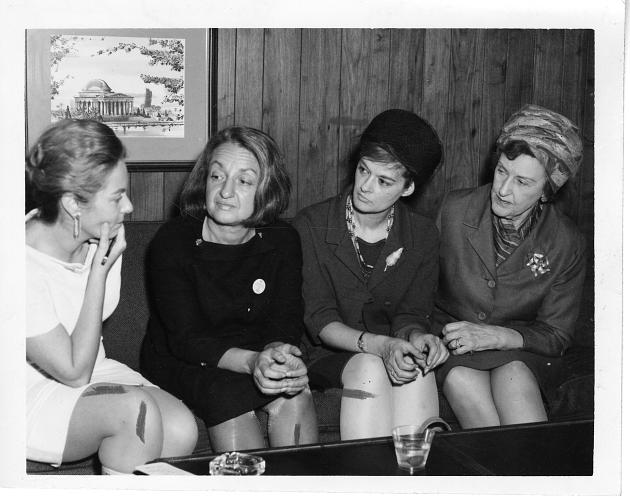
The second wave of feminism started in the 1960s after the publication of “The Feminine Mystique” by Betty Friedan. Over the years more rights for women were put in place, such as the famous Roe v. Wade decision in 1973. It established the right to abortion until June 2022, when it was overturned by the Supreme Court.
Different organisations such as the National Organization for Women (NOW) and the National Black Feminist Organization (NBFO) were founded to fight for women’s rights. Over time mainstream feminists started to include the struggles of Black and Lesbian women in their fight. However, intersectionality wasn’t as widespread then and their struggles were left out often.

Goals and Forms of Protest
Feminists in the 1970s fought for equal rights in the workplace as well as at home. Women wanted to work at the same jobs as men for equal pay, end gender-based violence and secure reproductive rights.
To spread feminist theories, women published books and newspaper articles and met up in local groups to discuss their experiences. Demonstrations brought the issue to the public’s attention and put pressure on politicians to take action. Organisations such as NOW had the possibility to take legal action and thus led to the development of many laws.
Women's Strike for Equality
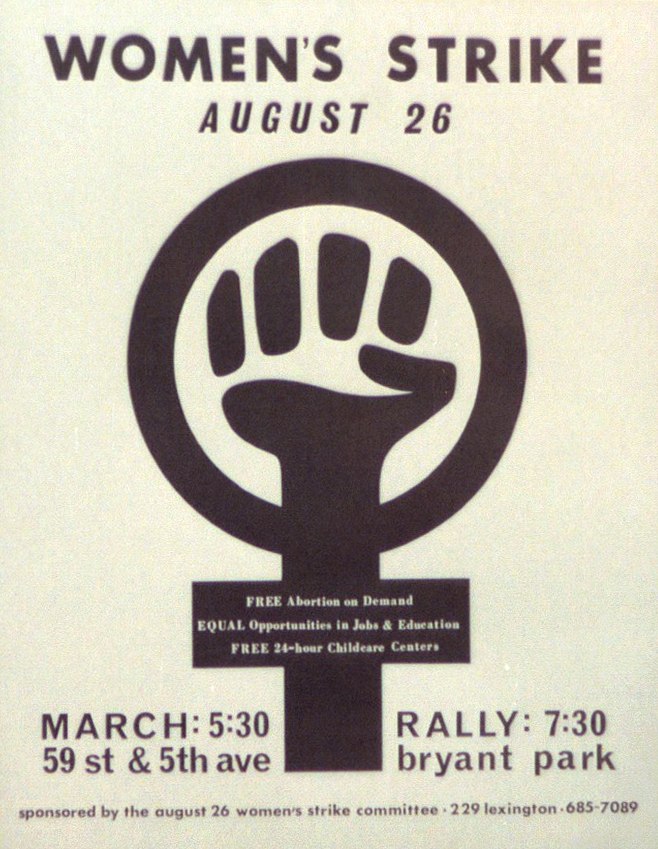
On August 26, 1970, the largest feminist movement of the 1970s took place. The “Women’s Strike for Equality” was announced at a NOW conference by Betty Friedan to celebrate the 50th anniversary of women gaining the right to vote in the US.
All across the country, women showed different forms of protest. For example: Male preachers invited women preachers to make the sermon that day. Many also stopped to clean, cook and take care of the children for the day.
The biggest protest march was held in New York City with more than 50.000 participants. Even in other countries such as France and the Netherlands, women marched in front of the U.S embassy.
The movement resulted in a lot of new members for the National Organization of Women and drew attention to the unequal pay for women’s work. Additionally, Congress declared August 26 Women’s Equality Day one year later.
.jpg)
Feminism Today
How did feminism change?
Nowadays feminism is quite different from the 1970s, even tough there are still many of the same problems present. Women have gained access to education, careers and leadership. Nevertheless, the fight for equal pay, abortion rights and against gender-based violence is still relevant today.
The third wave of feminism during the 1990s and 2000s is often considered to have destroyed certain achievements. During that time, feminism was supposed to be empowerment without actual confrontation. Structures that were already fought in the 1970s were able to reappear.
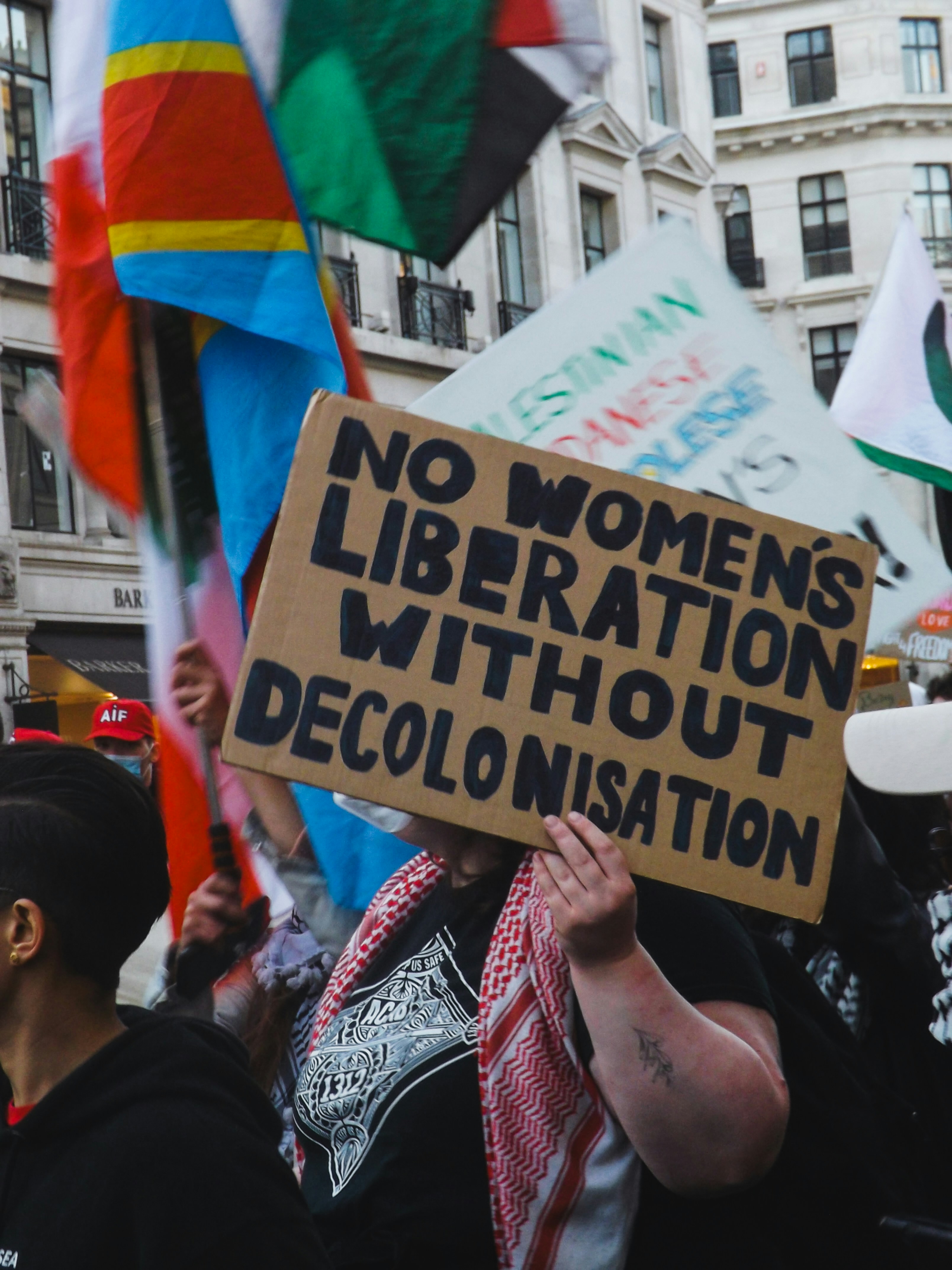
Intersectionality is one of the most important aspects of modern feminism. Activists explain, that gender, race and sexuality are all connected and thus all need to be considered in feminist movements.
Social Media & Feminism
The most notable change from the 1970s to now is the development of social media. Women are able to connect all around the world, share experiences and fight together against world-wide problems. Instead of trying to achieve gender equality through policy changes, feminists spread awareness about women’s right issues and they’re able to motivate a lot more people to contribute to feminist movements.
But there are also disadvantages because of social media. It’s a lot easier to spread harassment and disinformation. Like that, far-right people try to harm feminism. Even though a lot of information is easily accessible on the internet, people still fall for fake news.
Serra Utkum İkiz from Unsplash
G20 Women's Shutdown
The G20 Women’s Shutdown, also known as the Purple Movement, is one of the most recent examples for feminist protests. It started in South Africa, because a study revealed that 1 in 3 South African women have experienced physical and/or sexual violence. The protest movement was quite similar to the Women’s Strike for Equality in the 1970s.
Women stopped working for one day and many gathered in front of the seat of government in Pretoria. They lay down for 15 minutes to honour the 15 women who are murdered in the country every single day. Of course, the movement also spread through social media and many celebrities and others changed their profile pictures to purple. Because of that, the campaign became known as the Purple Movement.
After the large demonstrations and a petition that got more than one million signatures, the government declared gender-based violence and femicides a national disaster. The organisation Women for Change released a statement on social media that read:
"We have written history together [and] we have finally forced the country to confront the truth".
Similarities and Differences
Before I’ll come to my conclusion, we’ll look at a summary of the most important differences and similarities of feminism in the 1970s and today.
In the past there were a lot of different subgroups such as Liberal/White feminism, Black feminism and Lesbian feminism. While there are still subgroups today, intersectional feminism is the most common one. Today everyone is well connected through social media, but in the 1970s women were active in local groups or shared information through newspapers and books.
Organisations such as NOW tried to make legislative changes. Today many activists try to spread awareness online and fight disinformation.
Now and then, large demonstrations are one of the key factors. It brings attention to the topic and convinces many to join the cause. Even tough women have achieved many goals over the past centuries, the fight against inequality and violence is still relevant. Even today, no country has fully eradicated gender-based violence.
Conclusion
In conclusion, I’d say that feminism has become more effective over the years. Of course, there are still problems today. Far-right voices and certain subgroups of “feminists” such as TERFs try to divide feminist movements.
But feminism in general has become a lot more inclusive and intersectional. Social media has made communication around the globe possible, which is a great way to exchange experiences and information. Even though there is still a long way to go to achieve true equality everywhere, many countries are already moving in the right direction.
Frolicsome Fairy from Unsplash
Sources
https://dictionary.cambridge.org/dictionary/english/feminism
https://www.unwomen.org/en/articles/explainer/what-is-feminism
https://edition.cnn.com/2015/07/22/living/the-seventies-feminism-womens-lib
https://openpress.digital.conncoll.edu/feministtheory/chapter/second-wave-feminism/
https://www.thoughtco.com/1970s-feminism-timeline-3528911
https://www.womenshistory.org/exhibits/feminism-second-wave
https://www.thoughtco.com/top-feminist-organizations-of-the-1970s-3528928
https://wams.nyhistory.org/primary-source/women-strike-for-equality/
https://www.thoughtco.com/the-womens-strike-for-equality-3528989
https://abcnews.com/US/examining-modern-feminism-wave-now/story?id=97617121
https://now.org/blog/the-social-media-revolution-is-reshaping-feminism/